
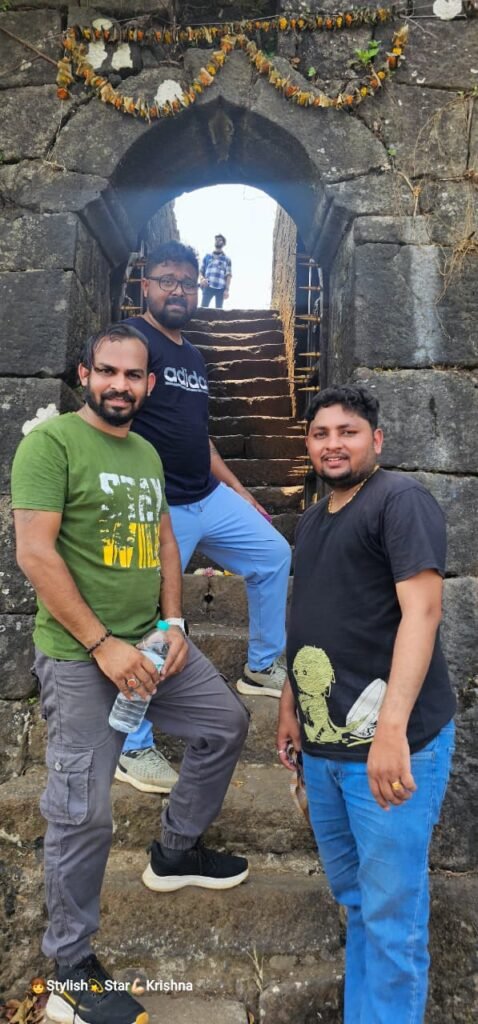
These are my colleagues—the ones who eventually became my close-knit friends.
When I shared photos from my Karnala trek, they all asked the same question, almost in unison:
“Why didn’t you tell us?”
The honest answer was: Because I wasn’t even sure about myself.
The obvious reply, of course, was:
“We’ll do it again.”
And that meant planning.
Amol had just bought a new car—a Tata Nexon—and we wanted an excuse to take it out.

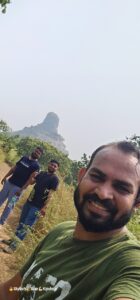
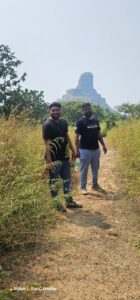
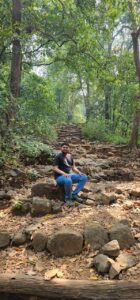
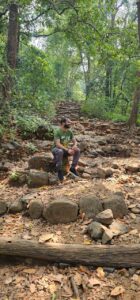
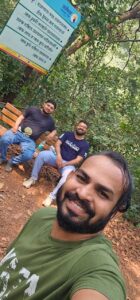
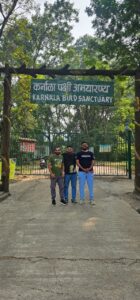
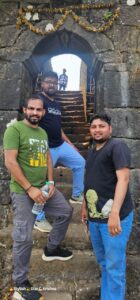
What made this trek different for me was it was not solo climb.
When you trek alone and fail, you’re still alone.
You don’t have to explain anything to anyone.
Solo trekking means you’re just with yourself. There’s no performance. Your thoughts are clear. You accept your limitations. You stop to breathe, rest, walk again. Walk slowly. There’s no competition. Nobody is walking faster than you—and even if someone is, you don’t give a Fuck.
You’re alone on the trail.
Having people along changes the meaning of the trek.
Now you have to talk.
You feel the need to lead.
You think you need to say something philosophical.
At least, that’s what I thought.
We did some of that—but the shared climb turned out to be unique for all of us.
For me, the third trek was no longer luck.
It felt like identity formation.
Being with two friends meant something unexpected:
At some level, I was the reason they were walking that trail.
Something shifted inside me.
Earlier, I wasn’t worried about walking at my own pace. But together, I became aware of how slow I was. I felt the urge to push harder. My legs were sore. I needed to stop, breathe, slow down—but at the same time, I wanted to show that I could climb faster.
At least Karnala—I had climbed it once before.
We made it.
We clicked photos again.
This time, we sat quietly in a corner of the fort and talked—for no particular reason.
I felt different.
We descended.
We were hungry.
And we ended the day with chulivarcha chicken and bhakri.